.png)
US Tariff Refunds Unlikely as Legal Battles Loom for Importers
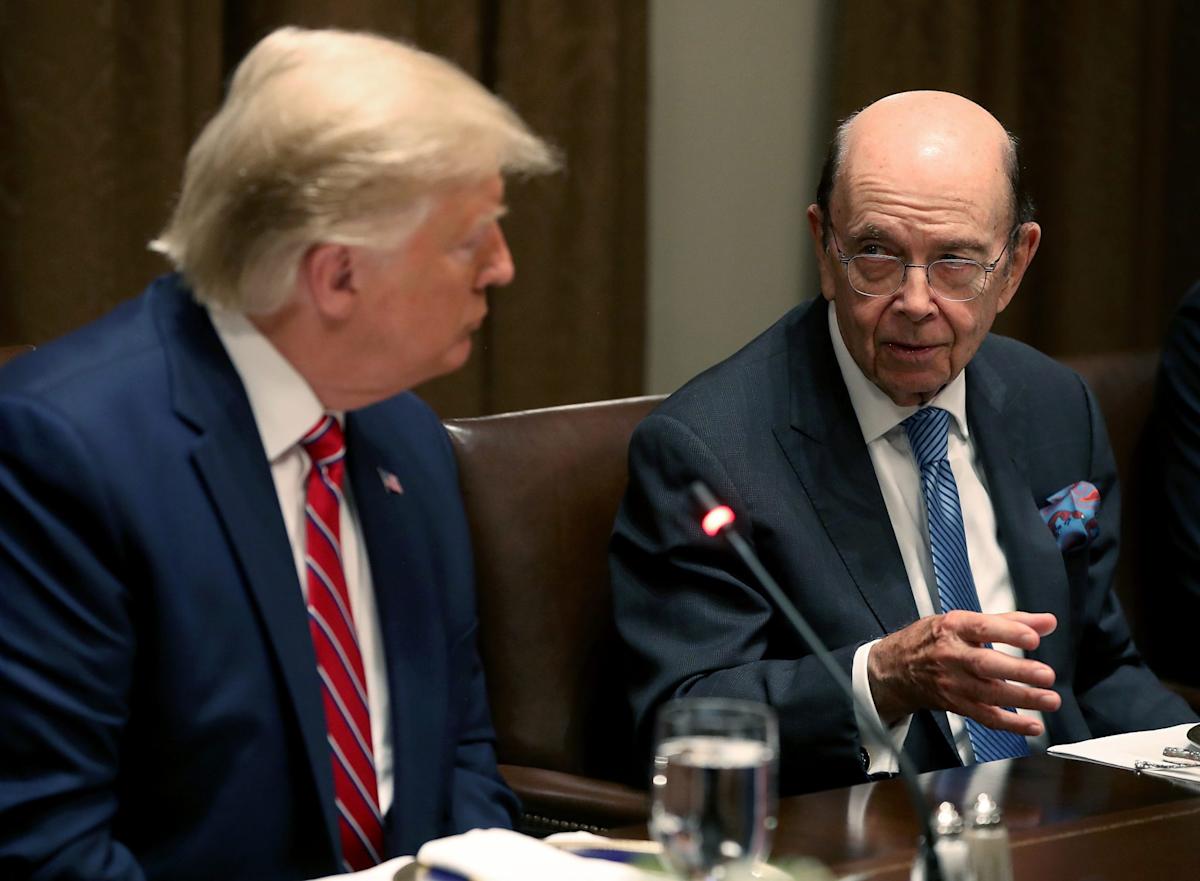
U.S. President Donald Trump listens to former Commerce Secretary Wilbur Ross speak during a luncheon with the President of Poland, Andrzej Duda at the White House on June 12, 2019 in Washington, DC. · Fortune Importers in the United States have little cause for optimism regarding the possibility of receiving refunds on tariffs. Treasury Secretary Scott Bessent has stated that the $175 billion collected under a now-invalid tariff scheme is unlikely to be returned to consumers. Former Commerce Secretary Wilbur Ross aligns with this view, predicting a prolonged legal battle over tariff rebate claims. He suggests that the issue could linger for years, returning to the Supreme Court, which has distanced itself from refund-related decisions. A recent ruling from the Supreme Court determined that President Trump could not impose tariffs using the International Emergency Economic Powers Act (IEEPA), pushing revenue disputes to international trading courts. Numerous importers have already initiated legal action to reclaim tariffs paid during the previous fiscal year. Ross emphasized the complexity of the situation, stating that while businesses initially absorbed the tariffs, the costs likely transferred to consumers through the supply chain. The Yale Budget Lab suggests that consumers could be shouldering 40-76% of costs for essential goods and 47-106% for durable goods. He further elaborated on the difficulties a court would face in determining which businesses might qualify for rebates and the amounts involved. According to Ross, "No two products and their related tariffs have the same mathematical progression," complicating the identification of eligible rebates across potentially hundreds of thousands of products. Ross also pointed out the daunting challenge of refunding consumers if courts were to pursue that route: "If you try to go to the extremely detailed level, try to figure out all the intricacies of the supply chain and then all the differences of the families, it would probably use up all the AI capability in the whole world before you got to an answer." According to Ross, Treasury Secretary Bessent's remark after the court ruling—that "I got a feeling the American people won’t see it"—reflects the likelihood of consumers missing out on rebates. He also noted that while businesses may receive refunds, this litigation will likely return to the Supreme Court multiple times, creating a “litigation mess.” Following the ruling, the Trump administration confirmed the enforcement of a 15% tariff under Section 122 of the 1974 Trade Act, which allows for temporary tariffs. This move is intended to buy time before establishing a more sustainable legal framework using either Section 232 or Section 301 to justify tariffs longer-term. <