.png)
Pope Leo XIV and Trump Square Off Over Iran War Threats — And What It Means for American Voters
- Apr 14
- 4 min read
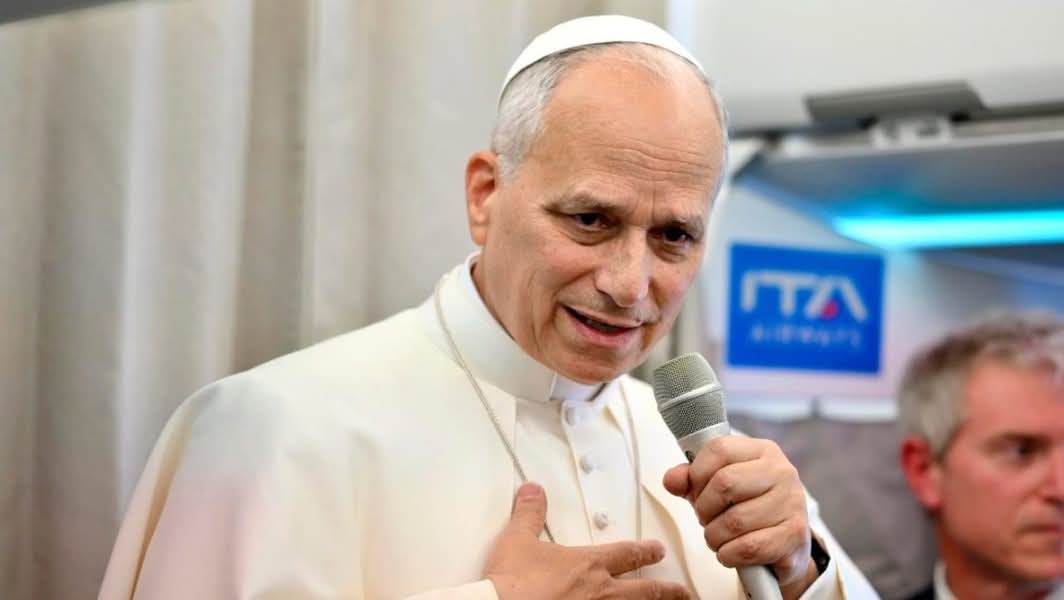
A sitting U.S. president and the leader of the world's 1.4 billion Catholics are publicly feuding — and the fight centers on war, power, and who gets to define American values on the world stage. For voters who care about how their leaders conduct themselves, this dispute is worth understanding.
The conflict between President Donald Trump and Pope Leo XIV escalated sharply after Trump issued threats of widespread bombing against Iran during Easter weekend, describing potential strikes on infrastructure and what he called the "eradication" of a "whole civilization." The newly elected pope responded by calling that kind of language "truly unacceptable." What followed was an unusually blunt back-and-forth between two of the most recognizable figures on the planet — both of them Americans.
How the Fight Started
Pope Leo XIV, born Robert Francis Prevost, was elected to lead the Catholic Church on May 8, 2025. From his very first appearance on the balcony of St. Peter's Basilica, he set a clear tone. His opening words were: "Peace with you all … the first greeting of the risen Christ, the Good Shepherd who gave his life for the flock of God." In his first Sunday blessing, he pointed to the wars in Ukraine and Gaza as signs of a "third world war in pieces." Quoting the Sermon on the Mount the following day, he reminded journalists: "Blessed are the peacemakers."
Trump initially welcomed the news of an American pope. He posted on Truth Social: "Congratulations to Cardinal Robert Francis Prevost, who was just named Pope. It is such an honor to realize that he is the first American Pope. What excitement, and what a Great Honor for our Country. I look forward to meeting Pope Leo XIV. It will be a very meaningful moment!" He also told White House reporters he was "a little bit surprised and very happy" about the outcome.
That goodwill did not last long.
Trump Claims Credit, Then Goes on the Attack
Within days of the papal election, Trump shifted from congratulations to claiming the Church had chosen Prevost specifically because of him. "He wasn't on any list to be Pope, and was only put there by the Church because he was an American, and they thought that would be the best way to deal with President Donald J. Trump," Trump posted.
After the pope criticized his Iran war rhetoric, Trump escalated further, calling Leo "weak" on social media and suggesting the pontiff was controlled by the "Radical Left." He wrote: "I don't want a Pope who criticizes the President of the United States because I'm doing exactly what I was elected, IN A LANDSLIDE, to do." He urged Leo to "focus on being a Great Pope, not a Politician." It is worth noting that Trump's 2024 election victory was not considered a landslide by standard electoral measures.
The Pope's Response
Leo has not backed down. Speaking to reporters aboard the papal flight to Algeria, he drew a direct distinction between his role and Trump's political framing.
"To put my message on the same plane as what the president has attempted to do here, I think is not understanding what the message of the Gospel is. And I'm sorry to hear that but I will continue on what I believe is the mission of the church in the world today."
He also addressed the feud head-on while traveling to Africa, stating plainly: "I'm not afraid of the Trump administration, or of speaking out loudly about the message of the Gospel, which is what the Church works for."
Who Is Pope Leo XIV?
Before becoming pope, Prevost spent years as a bishop in Peru, where he was already willing to speak out on global issues. In 2022, he publicly condemned Russia's actions in Ukraine on a Peruvian television program, calling it an "imperialist invasion in which Russia wants to conquer territory for reasons of power given Ukraine's strategic location." That footage resurfaced in Italian media after his election.
Earlier in 2025, then-Cardinal Prevost also shared a news article on social media that challenged Vice President JD Vance's position on immigration. The headline he shared read: "JD Vance is wrong: Jesus doesn't ask us to rank our love for others."
These are not the actions of a church leader who avoids political questions. Leo has consistently engaged with policy debates, though always framing his positions through religious and moral teaching rather than partisan politics.
A Language Choice That Sends a Message
One detail that has not gone unnoticed: despite being the first American-born pope, Leo has not leaned into that identity. When he addressed the world for the first time, he spoke in Italian and then Spanish — not English. His Sunday blessing was delivered almost entirely in Italian. Observers noted this appeared to be a deliberate signal that he sees himself as a global leader, not a representative of American interests.
Why This Matters to Voters
This dispute is more than a celebrity feud. It raises real questions about how American leaders engage with moral and religious authority, and how war and foreign policy decisions are discussed in the public square. During Palm Sunday, Leo quoted Scripture to warn that God "does not listen to the prayers of those who wage war, but rejects them, saying: 'Even though you make many prayers, I will not listen: your hands are full of blood.'" Around the same time, Trump hosted conservative religious advisers at the White House, where adviser Paula White reportedly compared him to a persecuted savior.
For American voters — many of whom are Catholic or hold deep religious convictions — watching a president and a pope exchange public rebukes over the ethics of war is an unusual moment. It puts two competing visions of leadership, faith, and American identity directly in conflict.