.png)
Supreme Court Overturns Trump's Tariff Policy, Sparking Trade Uncertainty
- Feb 23
- 3 min read
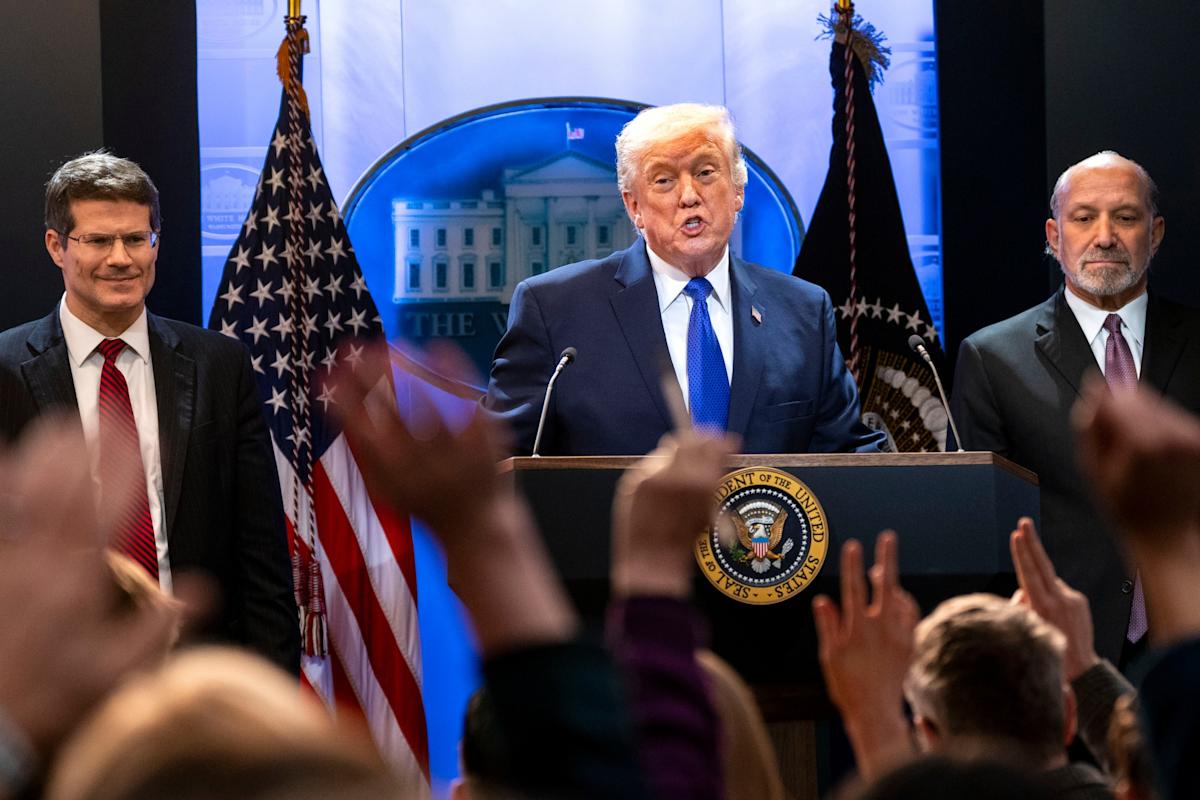
The recent decision by the U.S. Supreme Court to overturn former President Donald Trump's "reciprocal" tariff policy has introduced a wave of uncertainty into international trade relations. As global partners navigate this new terrain, the implications for existing trade agreements are becoming clearer.
EU Response to Tariff Policy Changes
In light of the ruling, the European Union has halted the ratification process of its trade agreement with the United States. This decision is indicative of an increasingly fragile transatlantic relationship, as the disruption has raised concerns over future economic exchanges.
Trump's Reaction and Future Tariffs
Former President Trump responded to his legal defeat by cautioning nations against exploiting the situation, asserting on Truth Social that countries attempting to "play games" with the ruling could face significantly higher tariffs. "Any Country that wants to 'play games' with the ridiculous supreme court decision... will be met with a much higher Tariff," he stated.
Following the court's decision, the Trump administration announced a replacement levy of 15% on imports, leaving American businesses and consumers with minimal relief amid ongoing trade tensions. The effective tariff rate remains largely unchanged, casting a shadow over the anticipated benefits of international deals.
Market Response and Global Reactions
Financial markets reacted with caution, evidenced by a decline in U.S. stock prices and fluctuations in the dollar's value. This response, while significant, pales in comparison to the volatility witnessed during the initial announcement of Trump’s tariffs last April.
Global trading partners are currently reassessing their strategies. Indian trade officials postponed a planned visit to the U.S., which aimed to finalize an interim agreement. Additionally, other nations, including the UK, Australia, and those in Asia, are observing the unfolding scenario with a mix of apprehension and strategic planning.
Tariff Strategies and Economic Implications
Economists from Goldman Sachs Project a minimal decrease in the tariff rate, estimating it will only lower by about one percentage point as a result of the new policies. Notably, the new tariffs will be enforced under Section 122 of the 1974 Trade Act, which permits the President to impose tariffs under certain circumstances without congressional approval.
The uncertainty surrounding these tariffs may once again escalate tensions, particularly after recent EU pushbacks on various fronts. Analysts from ING Groep NV noted that, "Uncertainty is back," suggesting that the risk of further conflicts in trade has increased significantly.
Broader Impact on Trade Relations
Countries in Asia and beyond are preparing for potential shifts in their economic relationships with the U.S. Indonesian Minister Prabowo Subianto expressed readiness for all eventualities following a recent deal with the U.S., while South Korea is also evaluating its position in light of the updated tariffs.
Trade analysts suggest that while some Asian nations may see a temporary decline in tariff rates, the overall picture is one of rising uncertainty. For instance, Singapore is keen to clarify how the new 15% tariff will affect its economy compared to the previous 10% rate.
Future Prospects and Economic Strategies
The Supreme Court's ruling has led to speculation regarding Trump's adherence to a robust tariff regime. Statements from officials indicate that alternative legal frameworks will be utilized to maintain tariff levels, thus prolonging the uncertain trade environment. “The Supreme Court decision may appear to be a major blow to the administration’s tariff policies, but its trade agenda can be pursued through other avenues,” stated Mike Reid from RBC Capital Markets.
Ultimately, as nations strategize around these developments, the focus on tariffs and trade dynamics will persist, leaving many to conclude that economic uncertainty will be a lasting feature of global commerce during this period.