.png)
Over 10,000 Veterans Have Lost Their Homes Since the VA Shut Down Its Key Rescue Program
A benefit long considered one of the most valuable rewards for military service is now failing thousands of the people it was designed to protect. More than 10,000 veterans have lost their homes to foreclosure in less than a year, and nearly 90,000 more are on the edge — all after a critical safety net inside the VA home loan program was quietly eliminated.
According to data from ICE Mortgage Technology, which tracks mortgage industry trends, the pace of foreclosures on VA-backed loans is now the highest it has been in a decade. The collapse of protections for veteran homeowners didn't happen overnight — it's the result of years of government missteps that stretch across two administrations and left military families trapped in a bureaucratic nightmare they didn't create.
"We should have something in place to try to stem people from losing their homes," said Steve Sharpe, an attorney with the nonprofit National Consumer Law Center.
How the Problem Started
The roots of this crisis go back to 2022, during the Biden administration, when the VA abruptly ended a key piece of its pandemic-era mortgage forbearance program. That program had allowed veterans who were struggling financially to temporarily pause their mortgage payments, with the understanding that those missed payments would be moved to the end of their loan term — the same option available to millions of other Americans with government-backed mortgages through Fannie Mae, Freddie Mac, or the FHA.
When the Biden VA shut that option down without a replacement, tens of thousands of veterans were suddenly told they owed all of their missed payments back at once — a lump sum that most could not afford. Others were offered a loan modification, but interest rates had jumped from around 3% to 7% by then, making that option just as unaffordable for many families.
After reporting by NPR in late 2023 brought national attention to roughly 40,000 veterans trapped in this situation with no workable path forward, the VA froze foreclosures nationwide and began developing a rescue program. That program, called VASP — the VA Servicing Purchase program — eventually gave more than 33,000 veterans new mortgages at a fixed interest rate of 2.5%, keeping them in their homes.
The Trump Administration Shut It Down Anyway
By early 2025, VASP was fully operational and helping veterans at scale. But on May 1, 2025, the Trump administration ended the program. Mortgage servicers and VA staff were given just one week's notice. Veterans already enrolled in VASP kept their low-cost loans, but no new applications would be accepted.
The administration had been warned this would happen. At a House Committee on Veterans' Affairs hearing in March 2025, Elizabeth Balce, representing the Mortgage Bankers Association, was direct about the consequences of ending VASP without a replacement ready to go.
"Foreclosure. Period. That's really where it's gonna come to," Balce warned.
Less than two months later, the program was gone. Thousands of veterans who were still waiting to be enrolled — including many who had enough income to sustain a mortgage under the program — lost their chance. The VA has not explained publicly why it shut down VASP without first having a replacement ready.
Veterans Left Paying Hundreds More Per Month
With VASP gone and no other option on the table, many veterans behind on their loans felt pressured into accepting loan modifications that came with significantly higher monthly payments — sometimes hundreds of dollars more than what they had originally agreed to pay.
Army veteran Jon Henry of Kansas City, Mo., who served in Iraq during the first Gulf War in a unit designed to counter chemical warfare attacks, lost his job managing a manufacturing plant and fell behind on his mortgage. He's back to work now but ended up locked into a modified loan with monthly payments $380 higher than his original mortgage.
"It's a struggle," Henry said. "Especially with everything else being inflated in the country, you know, with groceries, gas … I'm like, what the hell?"
Shante Benfatto, a veteran who served in Afghanistan and is rated 100% disabled by the VA, and her husband Mark fell behind on payments when he was between jobs. They say they spent months trying to get enrolled in VASP, but their lender didn't complete the necessary paperwork before the VA abruptly shut the program down. Facing foreclosure letters, they accepted a modified loan with payments roughly $300 a month higher than their original mortgage.
"It hurts paying $3,200 a month," Shante Benfatto told NPR.
"We're paying late because we can't afford to pay the extra money until the end of the month, until she gets her disability," said her husband, Mark. The late fees add an additional $105 to their monthly mortgage bill.
Jerome Thomas, an Air Force veteran in Port Charlotte, Fla., who has lived in his home for 10 years, saw his monthly payment jump by $800. His interest rate more than doubled, rising to 6.8%. He says his lender told him he had to accept those terms or face foreclosure.
"I told them I can't afford to pay it," Thomas told NPR. Now behind on that modified loan and receiving foreclosure warning letters, he added: "I got my three kids in here, I've got the wife, she's a teacher … it's bad."
Unlike veterans, homeowners with mortgages backed by Fannie Mae, Freddie Mac, or the FHA have access to emergency assistance options that do not raise their interest rate or monthly payment. Veterans with VA-backed loans no longer have that same protection.
The VA's Replacement Program Has Problems
The Trump administration says a new assistance program is in development, but it won't be operational for several more months. Under the current draft, the program would allow veterans to move their missed payments to the back of their loan term, letting them keep their existing mortgage and interest rate — which could be a meaningful lifeline for those who locked in lower rates.
But the draft contains a significant catch. As currently written, if a modified loan at a higher interest rate would only raise a veteran's monthly payment by up to 15%, mortgage servicers would be required to put the veteran into that more expensive loan — rather than offering the option of keeping their original, lower-cost mortgage by deferring missed payments.
That means a veteran paying $2,000 a month could be pushed into a loan costing up to $300 more per month, even when a better option exists.
The mortgage industry is pushing back. Pete Mills, an executive with the Mortgage Bankers Association, wrote in a letter to the VA: "As drafted, Veterans will continue to have worse options than similarly situated non-Veterans."
"Payment reduction is the most important driver of modification performance, and the current policy will lead to higher redefault rates," Mills added. The association is urging the VA to make higher-payment loan modifications a last resort, not a default option.
Housing advocates are also calling on the VA to ask mortgage companies to pause foreclosures on veterans until the new program is ready. "We're talking about a heck of a lot of folks," said Sharpe, with the National Consumer Law Center.
The new program, even when it does launch, will not help veterans like Thomas, Benfatto, or Henry who were already pushed into higher-cost modified loans. It won't bring their payments back down.
One Family's Story
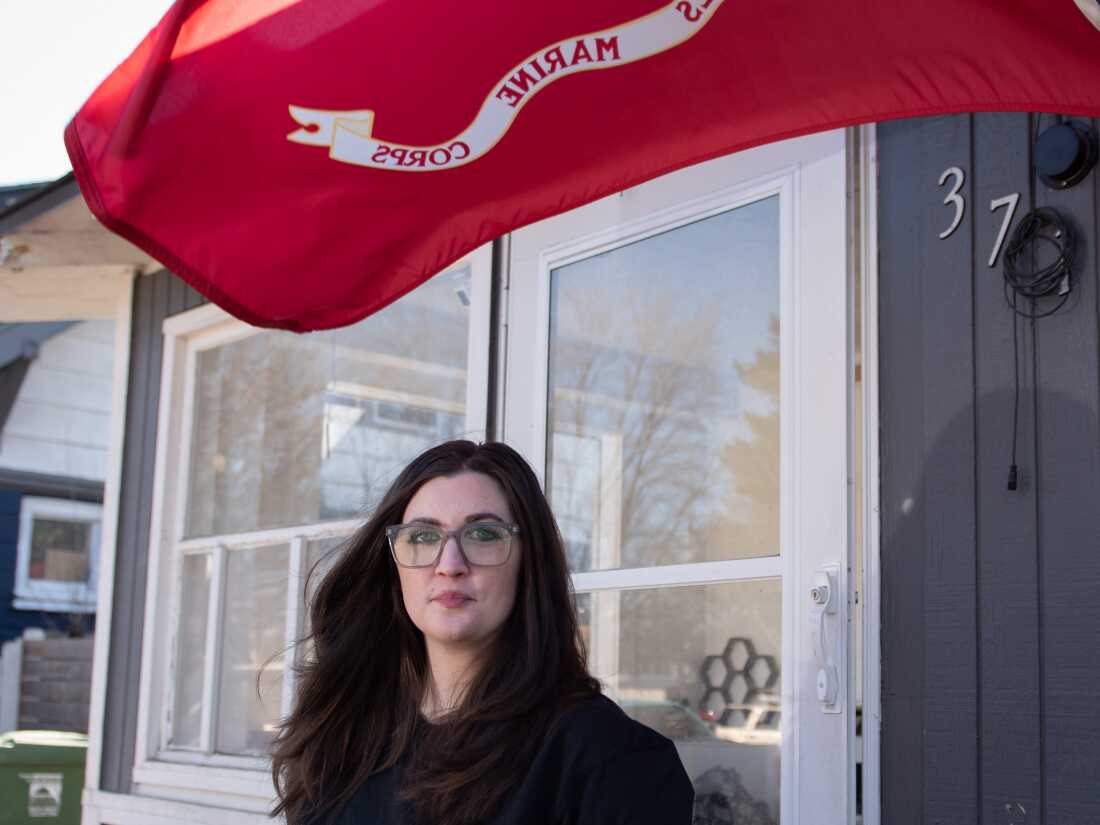
For Leann Ledford and her family in Spokane, Wash., it is already too late. Her husband is a Marine who was injured in Afghanistan and lives with PTSD and a traumatic brain injury. After years of fighting through VA red tape to secure his disability pay, the couple and their young son spent six months living out of a trailer while waiting for his paperwork to be processed. When they finally got back on their feet, they bought a home in January 2021 using a VA-backed loan.
"When you lose your home, your house, nothing else matters," Ledford said.
Stability made a real difference for their family. Their son enrolled in the elementary school across the street. Her husband's symptoms improved as their stress decreased.
"He's been able to live over half his life in our house now, and he doesn't remember all the bad years 'cause he was too little," Ledford said.
In 2022, after costly home repairs strained their budget, their lender, Freedom Mortgage, told them they qualified for a forbearance program. They were told they could pause payments for a year, and that those payments would simply be added to the end of their loan.
"They told us it was for a year, and they would check in after six months," Ledford said. "And then we would just pick up our payments at the end of the year … It felt like such a relief for us."
Then the Biden administration shut down the program option that made that deferral possible. Suddenly the Ledfords were told they owed a lump sum they couldn't pay, and refinancing at the new, higher interest rates would have raised their monthly payment by around $1,000.
"And we're like, wait a minute, what?" Ledford recalled.
They were told to keep applying for assistance through the VA's loss mitigation process — a process that dragged on for years and, according to Ledford, never produced any actual help. VASP could have been their way out. The Ledfords receive $3,971 a month in disability pay, and their original mortgage payment was $1,447 a month. Under VASP, they would have had an affordable path to stay in their home. But they hadn't been enrolled before the Trump administration shut the program down.
"I found out that [VASP] was ending and I called the VA loan technician and they didn't even know yet," Ledford said. "They had to go figure out what was going on."
Freedom Mortgage completed a foreclosure sale on the home. The Ledfords only found out it had happened when someone knocked on their front door.
"We didn't know that the foreclosure sale went through until somebody knocked on the front door," Ledford said.
The VA now owns the property and has told the family they must leave. The agency offered them $3,500 in what is commonly called "cash for keys" — money paid to former homeowners in exchange for vacating the property. To receive even that, the Ledfords were told they needed to be out by April 3.
Ledford's husband has deteriorated under the stress. He began having seizures again and did not want to be part of this story. "It has really impacted him, and he is really struggling," she said.
In a written statement, VA press secretary Pete Kasperowicz said: "VA worked tirelessly with the Ledford family to help keep them in their home. However, they were nearly four years behind on their mortgage payment, and the decision to foreclose on their mortgage was made by Freedom Mortgage." Freedom Mortgage did not respond to requests for comment.
The VA also stated: "Per federal law, VA's home loan program is based on the premise that while Veterans may need some assistance, they must generally be able to make their mortgage payments."
That statement does not address the fact that the Ledfords, like many other veterans caught in this situation, say they were not permitted to resume making payments while stuck in the VA's loss mitigation process — a process that spanned years without resolution. The VA did not answer questions about whether it could take any action to help the family, given that it now owns the home. Its only stated offer of assistance was health care services.