.png)
A Pennsylvania Family Torn Apart: The Story of Carlos Della Valle and America's Immigration System
- Small Town Truth

- Apr 2
- 7 min read
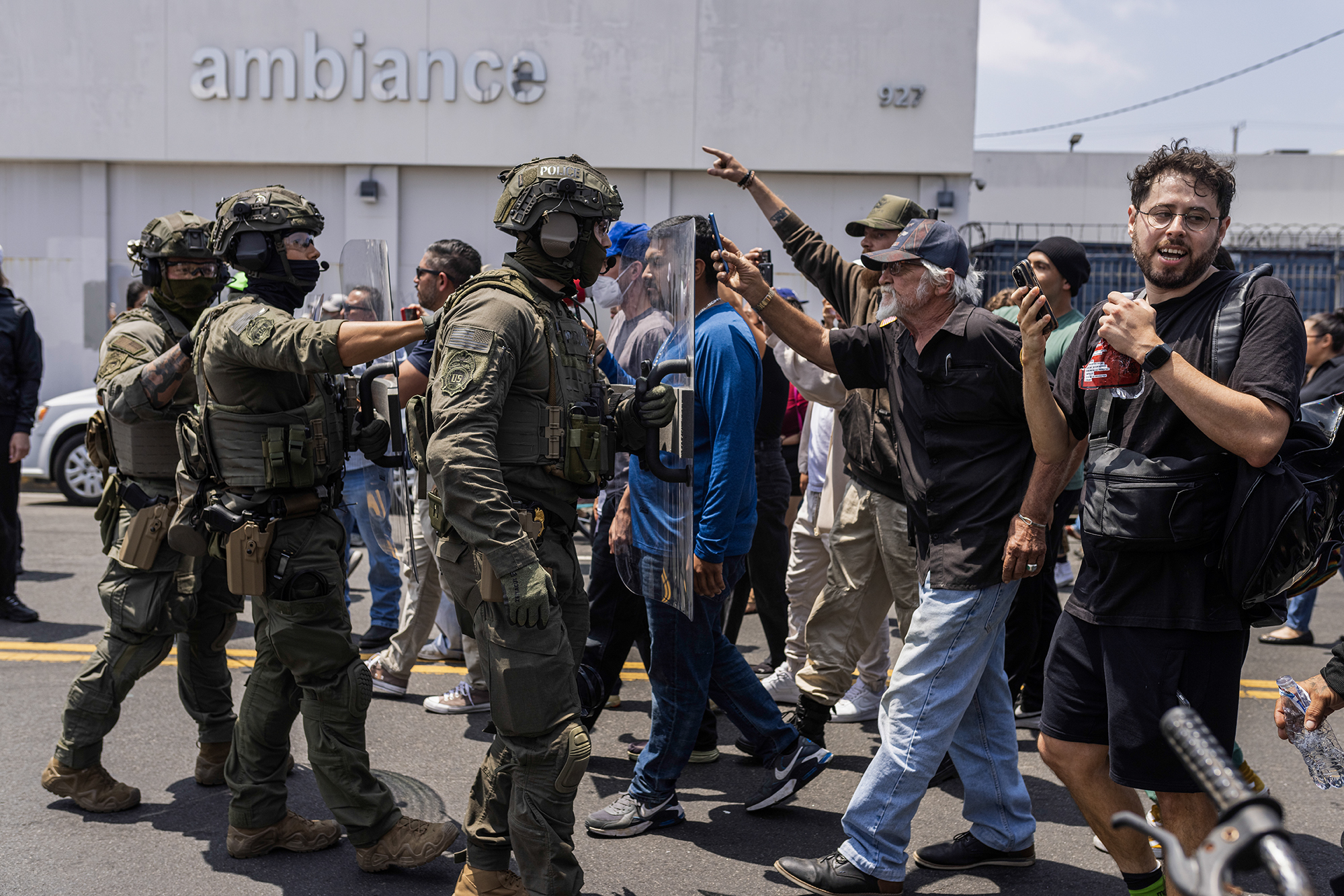
For five months, Angela Della Valle has been living out of hotels and rental properties across three states and two U.S. territories, chasing her husband through a maze of immigration detention centers. Her story puts a human face on a national debate that, for hundreds of thousands of American families, is not a debate at all — it is daily life.
Angela, 49, is a middle school teacher from Downingtown, Pennsylvania. Her husband, Carlos, is a 49-year-old Mexican national who has lived in the United States for nearly 28 years. He has no criminal record. A jury found him not guilty of illegal reentry. He paid his taxes, raised a son, managed a plant, and quietly built a life in a small Pennsylvania borough. None of that was enough to keep him out of immigration detention.
Carlos Della Valle was detained on Christmas Day 2024 at the airport in St. Thomas, U.S. Virgin Islands, where the family had gone on vacation. He has since been moved through more than a dozen detention facilities. Angela has stayed at 21 different hotels and rental properties trying to stay close to him.
How It Started
Carlos grew up in the Mexican state of Guerrero. Unable to find steady work and assaulted four times by a local drug cartel for refusing to join, he borrowed money from his grandmother and crossed into Arizona in 1997 with the help of paid smugglers. He was detained and deported. Unaware that re-entering the country after deportation carries a penalty of up to two years in prison, he crossed again and settled in Chester County, Pennsylvania, where friends of his grandmother lived.
He met Angela in 1998. She was in college and teaching English as a second language at night. Carlos was one of her students. They married in 2002 without consulting an immigration lawyer. They spent the next two decades trying to adjust his legal status, keeping a low profile and avoiding anything that might draw attention.
Carlos never got so much as a traffic ticket. He worked three minutes from home. Angela made dinner. Carlos cut the grass. They took annual Christmas vacations to Puerto Rico, California, and Florida without incident. Then came St. Thomas.
Around 12:45 p.m. on Christmas Day, Angela was about to step through the body scanner at the Cyril E. King Airport when she looked back and Carlos was gone.
"Where is my husband?" she asked the TSA agents. They did not answer.
Angela sat on a gray metal bench near the TSA screening area for more than six hours. She watched other travelers take off their belts and put their shoes back on. She was afraid to leave her seat in case Carlos reappeared. Around 8 p.m., an immigration agent approached her.
"You probably know, but your husband has an old deportation from 1997," he told her. "We have to hold him in custody."
Peering through an open office door while the agent spoke, Angela spotted Carlos seated at a desk. She shouted to him through the doorway.
"Do you want to fight?" she shouted to him, with the agents listening in.
"Yes," he yelled back.
Not Guilty — But Still Detained
Two days after Christmas, Angela scrambled to find legal help in St. Thomas. A federal public defender, Melanie Turnbull, walked into the courtroom and asked for a recess. By that evening, Carlos was released on a $20,000 bond. An August trial was scheduled to determine whether he had illegally re-entered the country.
Twenty friends and supporters flew in from Pennsylvania for the trial. Over 200 letters from the Chester County community were submitted to the court on Carlos's behalf. The letters described a man who had worked his way up to plant manager, contributed to his community, and embodied values that his neighbors admired.
The president of the adhesive company where Carlos worked had voted for President Trump and supported stricter immigration enforcement — but not when it came to Carlos.
"I'm sure President Trump had men like Carlos in mind when talking about what the new immigrants will look like. He's not that criminal element that's come here," the company head wrote to the court.
Community members described Carlos in their letters as someone who "humbly emulates what it means to be a true human, community member and American" and "the kind of man I hope my sons will be one day."
After a two-day trial, the jury found Carlos not guilty. The cheers had barely faded when an immigration agent pulled the couple aside.
"Carlos, I'm sorry," the ICE officer told them. "You are without status, and you're going into detention."
She granted them one final night together. The next morning, Carlos reported to the St. Thomas ICE facility and turned himself in.
A Revolving Door of Detention Centers
What followed was a five-month odyssey through the immigration detention system. Carlos was transferred through facilities in the U.S. Virgin Islands, Puerto Rico, Florida, Louisiana, and Texas — more than a dozen locations in total. Angela followed him every step of the way.
In Florida, she drove to the Everglades to visit him at the detention facility known as Alligator Alcatraz. When she told the guard at the checkpoint that her husband was a detainee, he turned her away. She never got in.
"This place is everything they say it is," Carlos told Angela during a phone call from the facility.
Carlos was transferred 10 times within Florida alone before being moved to Winn Correctional Center in Winnfield, Louisiana — a former state prison that now holds immigration detainees, located in the middle of the Kisatchie National Forest. The region is sometimes called "Detention Alley" because it houses 14 of the largest immigration detention centers in the country.
In the fall of 2024, federal investigators began examining Winn after receiving more than 100 allegations of civil rights violations. The allegations included a guard demanding that a detainee "get down on his knees and beg" for his legal documents, confinement of detainees in a freezer, and a pepper-spray incident involving 200 cell-confined detainees.
Despite those conditions, the move to Winn was a relief for Angela. For the first time since his detention began, visitation was possible. She moved into a rental in Natchitoches, Louisiana, about 30 miles away, and began making the daily hour-long drive through the yellow-pine hills to see him.
The Bigger Picture
The Della Valle family is what immigration officials call a mixed-status family — one that includes both U.S. citizens and undocumented members. The Department of Homeland Security estimated in 2024 that approximately 765,000 noncitizens are married to U.S. citizens but lack lawful immigration status. Many have been married for more than 20 years.
Marriage to a U.S. citizen provides a legal pathway to citizenship, but only for those who entered the country lawfully. Those who entered illegally can be barred from returning for up to 10 years. Carlos's situation was further complicated by his second entry after deportation, which made him ineligible for the Biden administration's 2024 "Keep Families Together" program — a policy that was in any case suspended in November 2024 following legal challenges from Republican-led states.
Marielena Hincapié, an immigration scholar at Cornell University who helped shape the Biden program, said the only lasting fix requires action from Congress.
"These are families who are deeply rooted, who are part of our communities, who are contributing," Hincapié said. "The cruelty, the inhumanity and the complexity of the immigration system are being brought home to local communities in a way that people had never experienced or never understood before."
The Trump administration has taken a different approach. Rather than focusing enforcement on violent offenders, it has widened the net. It has also fired scores of immigration judges and stripped thousands of immigrants of temporary protected and humanitarian status.
In response to questions about Carlos's case, DHS Assistant Secretary Tricia McLaughlin said the Trump "administration is not going to ignore the rule of law." She said that "illegal aliens" like Carlos should self-deport and accept a $2,600 incentive, which would give him a "chance to come back to the U.S. the right legal way to live the American dream." The agency did not address the fact that Carlos had been found not guilty of illegal reentry.
A Son on His Own
The toll on the family extends beyond Angela and Carlos. Their son Alessandro, 20, is a junior at the University of Pittsburgh. When the fall semester started, he moved back to campus without either of his parents — something that had never happened before.
"It can't get any harder," the 20-year-old thought as he drove back for move-in day of his junior year at the University of Pittsburgh. "Then it gets harder."
In November, Alessandro drove to Louisiana to visit his father at Winn. He had imagined something smaller. As they approached, the facility seemed to grow larger. The razor wire, the metal detectors, the pat-down from guards — all of it was jarring. When Carlos finally walked through the detainee entrance, Alessandro broke down.
His father looked thin and pale. He had lost muscle mass and had deep bags under his eyes from lack of sleep. Alessandro held on tightly.
Angela watched the reunion and fought back tears, thinking about all the father-and-son moments the detention had already taken from them. The visit lasted one hour.
A Deportation Order and an Appeal
In November, a court hearing was held to consider whether Carlos faced genuine danger if deported to Guerrero, Mexico. His lawyers submitted news articles and research documenting widespread violence in the region. In the spring of 2025, 11 bodies were discovered in Tecoanapa, Guerrero, following a clash between criminal groups. In another city, the mayor was beheaded. The U.S. State Department has assigned Guerrero its highest travel alert — Level 4, "Do Not Travel" — citing cartels and criminal organizations.
Carlos addressed the judge directly during the hearing.
"I have a White American wife and son," Carlos told the judge. "They're going to find me. They're going to kill or extort me."
Government lawyers argued the threat was too general. The judge sided with the government and reinstated the deportation order, while allowing Carlos's lawyers to appeal.
"I'm really sorry. I wish you guys luck. Happy Thanksgiving," Angela remembered the judge saying.
That appeal is still working its way through the courts. Carlos could be deported at any time.
A bill introduced by U.S. Rep. Maria Elvira Salazar, a Miami Republican, could offer a path forward. It would allow immigrants who have lived in the United States for more than five years to apply for legal status. The bill has made little progress since it was first introduced.
Back in Downingtown, churches have held vigils. Neighbors have placed "Bring Carlos Home" signs in their yards. A GoFundMe campaign has raised more than $90,000. Angela continues to make the drive to Winn each day, fighting a system that she says has turned her husband into human cargo.
One of Carlos's friends, recently deported from Winn and reunited with his own family in Mexico, sent Angela a message that stayed with her.
"Eres una sombra atrás de Carlos y la mejor medicina para él es verse," he told Angela. "You are a shadow behind Carlos, and the best medicine for him is to see you."