.png)
Trump's $2,000 Checks Proposal Faces Skepticism from Economists
- Small Town Truth

- Nov 13, 2025
- 2 min read
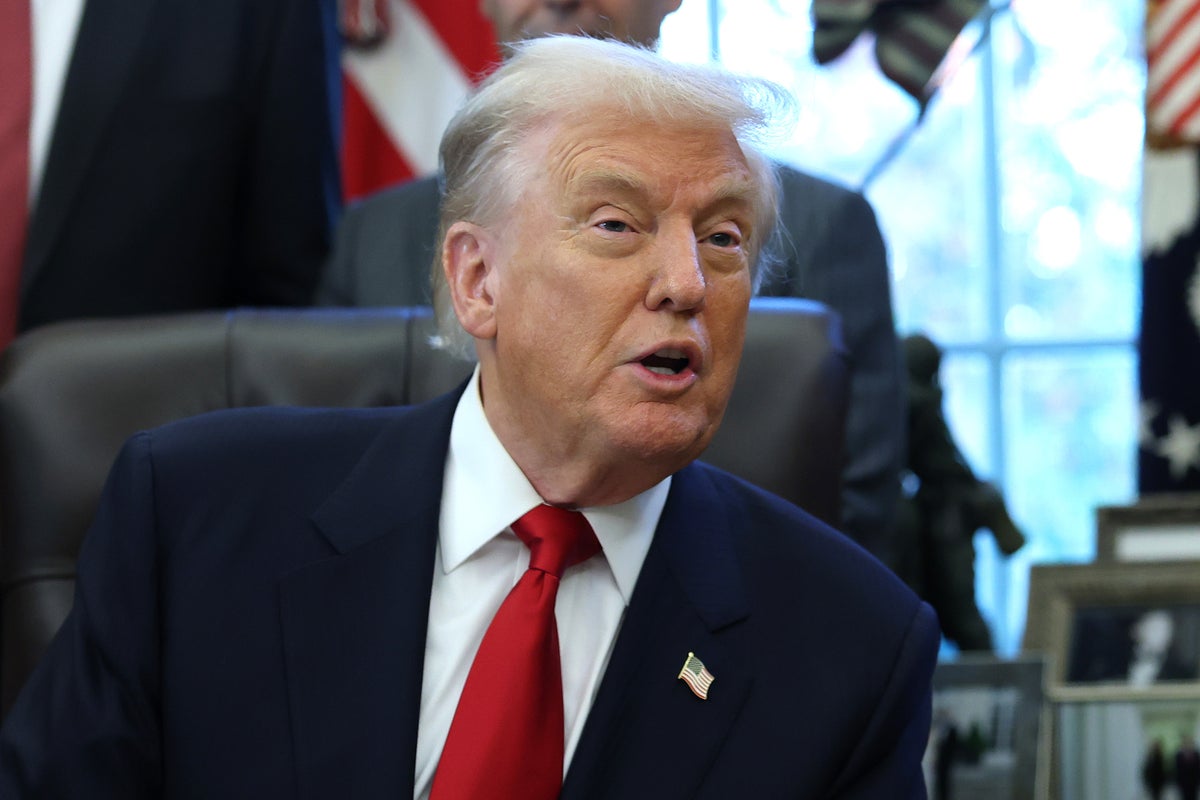
In a recent announcement, President Donald Trump committed to distributing $2,000 checks to Americans, which he claims will be funded by revenues from his administration's controversial tariff policies. However, financial experts are expressing skepticism about the feasibility of such a proposal. Trump stated on his Truth Social platform, “A dividend of at least $2,000 a person (not including high income people!) will be paid to everyone” as he advocated for his tariff strategy. While the proposal has garnered attention, specifics regarding eligibility, income limits, and whether children would receive payments were not disclosed. Economists, including Erika York from the Tax Foundation, are questioning the accuracy of the underlying calculations, with York noting simply, “The numbers just don’t check out.” Trump's administration has seen tariff-generated revenue soar to $195 billion, a significant increase from $77 billion in 2024, as reported by the Associated Press. Despite this revenue spike, it has had minimal impact on the federal budget deficit, which is projected to reach $1.8 trillion for the 2025 fiscal year. Trump's proposed $2,000 checks raise concerns among economists about the feasibility of the plan. (Getty) John Ricco, an analyst from Yale University's Budget Lab, pointed out that while tariff revenues might reach between $200 billion to $300 billion annually, distributing $2,000 to all Americans, including children, would cost around $600 billion. He stated, “It’s clear that the revenue coming in would not be adequate.” Even in a scenario where the checks were limited to adults, the total would still exceed available revenue; there are over 258.3 million people over the age of 18 in the United States, indicating potential payouts would surpass $516 billion. Ricco also highlighted the necessity of Congressional approval for such payments, noting that Trump would not be able to unilaterally implement this plan. Furthermore, there is concern that the existing tariffs might be financially burdensome for U.S. consumers, as businesses tend to pass on the costs to customers in the form of higher prices, according to experts. York remarked that the proposed dividend approach “misses the mark,” suggesting that if the intention is to provide financial relief, the tariffs themselves should be eliminated. The Supreme Court recently held discussions regarding challenges to these tariffs, with lower courts having previously ruled the use of emergency powers to enforce them as illegal. If the Supreme Court rules similarly, it’s possible that money previously collected from tariffs could be refunded to importers rather than distributed to American citizens. <img alt="Scott Bessent, Treasury Secretary, speaks on Trump's checks proposal." width="960" class="rounded-lg" src="https://s.yimg.com/ny/api/res/1.2/9Bl0jymb30AhhT_SUWKmPg--/YXBwaWQ9aGlnaGxhbmRlcjt3PTk2MDtoPTY0MDtjZj13ZWJw/https://media.zenfs.com/en/the_independent_577/207565621ccd3776e84733e8fb