.png)
Trump Proposes Tax Shift from Income to Tariffs Amid Expert Skepticism
- Small Town Truth

- 15 minutes ago
- 3 min read
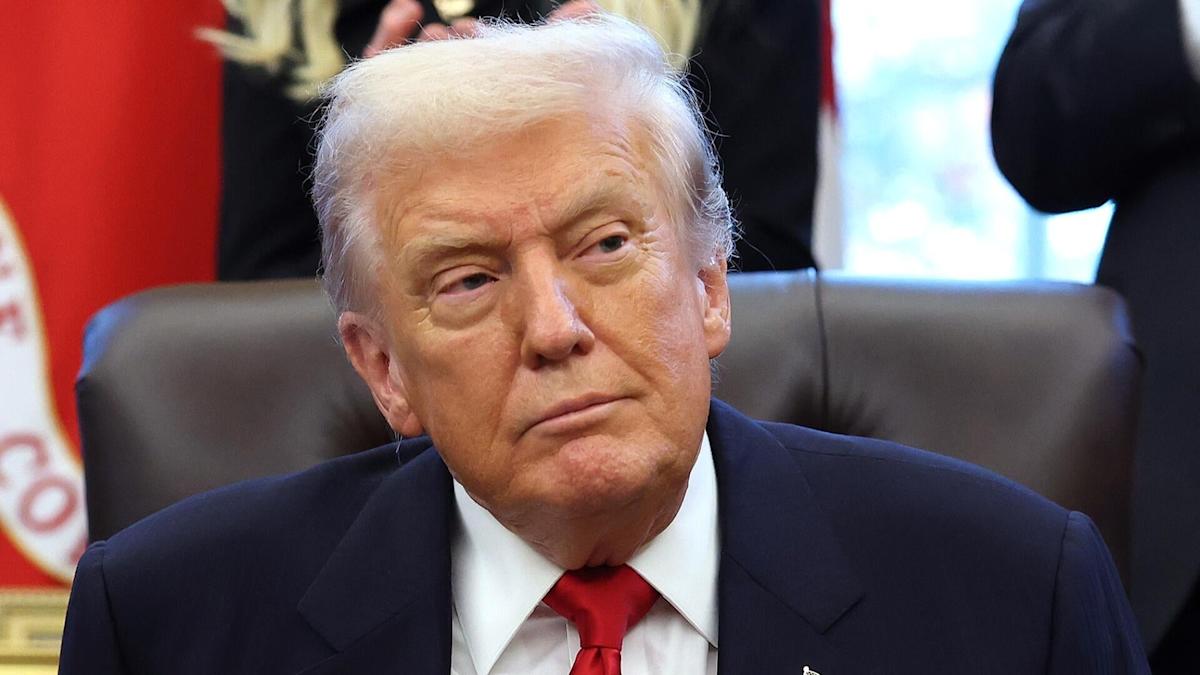
In a recent Cabinet meeting, President Trump presented a controversial proposal that envisions using tariff revenue to potentially eliminate federal individual income tax. While this idea may attract the attention of many families facing financial challenges, experts in taxation express significant doubts regarding its feasibility. Trump remarked, "I believe that at some point in the not-too-distant future, you won't even have income tax to pay because the money we're taking in is so great." His comments reflect optimism about the tariff revenues stemming from his administration's trade policies aimed at imposing import taxes on foreign goods. While the Supreme Court is currently assessing the constitutionality of these tariffs, collected revenues have seen a notable increase. The Treasury Department reports a substantial rise in tariff collections attributed to Trump's trade measures. According to White House spokesman Kush Desai, this tariff strategy is expected to generate trillions for the federal government in the years ahead. He noted that "the costs [of tariffs] will ultimately be paid by the foreign exporters who rely on the American economy, the world's biggest and best consumer market." However, the prospect of completely replacing individual income tax with tariff income is met with skepticism from tax specialists. Erica York, vice president of federal tax policy at the Tax Foundation, stated, "It is mechanically impossible to fully replace income tax revenues with tariffs. Any real attempt to do so would harm working-class Americans, damage the U.S. economy and significantly increase the federal budget deficit." Current projections suggest that Trump's tariff policy could yield approximately $2.1 trillion over the next decade, a stark contrast to the $32 trillion expected from federal individual income taxes during the same period. The IRS records show that income taxes contribute roughly $2.7 trillion annually in federal revenues, while the tariff revenue for fiscal year 2025 is estimated to be $195 billion, according to Treasury data. Experts argue that tariffs simply lack the capacity to cover such a massive revenue gap. York further explained, "Tariffs, even applied maximally, simply could not generate that level of revenue — imports are not a large enough tax base." Some analysts do acknowledge the possibility of utilizing tariff income for modest tax cuts, yet they caution that low-income families would likely see little benefit since they pay minimal income tax. Scott Lincicome from the Cato Institute noted, "If they did a flat 3% reduction in income tax, the only people who would really benefit are the top 10%" of earners, who currently pay approximately 72% of the nation’s income taxes. Additionally, Trump has proposed the concept of a $2,000 "tariff dividend" check for American households, an idea he reiterated during the Cabinet meeting. Nevertheless, Lincicome described this proposal as problematic, indicating that such a payment could cost between $300 billion and $600 billion — a figure significantly higher than current tariff collections. Implementing any change to the tax code to accommodate either tariff payments or reductions in income taxes would necessitate congressional action, which may prove challenging amid increasing partisanship. Already, some Republican lawmakers have expressed concerns; for example, Senator Ron Johnson stated the country "can't afford" such measures. As the discussion continues around tariffs and potential tax reforms, the consensus among economists suggests that raising tariffs to a level capable of substantial revenue may lead to decreased import activity, ultimately lowering tariff intake. "There is a hard cap on the amount of money you can raise with tariffs," Lincicome said, highlighting that too high a tariff rate would discourage purchasing imported goods. Presently, U.S. consumers face an average effective tariff rate of nearly 17%, the highest since 1935, according to the <a href="https://budgetlab.yale