.png)
Trade Tariffs Threaten Jobs in Alcohol Industry Amidst Trump's Policies
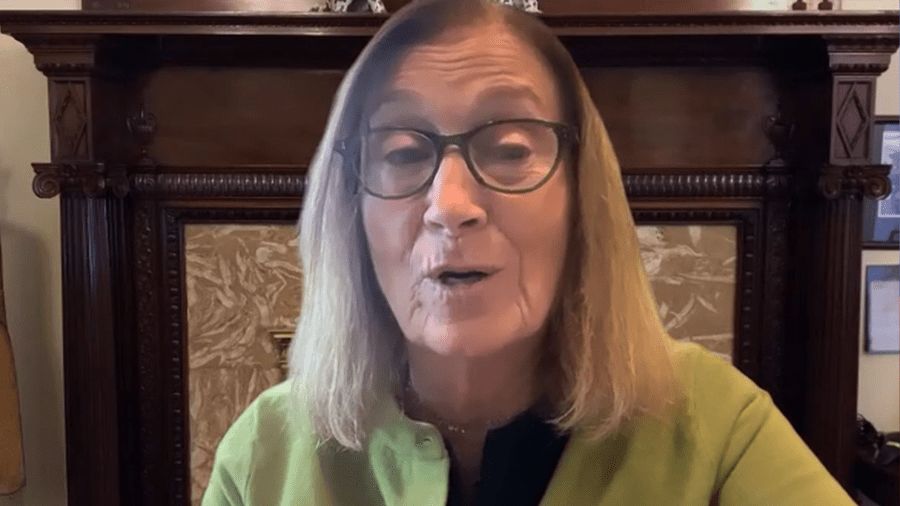
BOSTON (SHNS) - The ongoing trade policies initiated by President Donald Trump are sparking concern among leaders in the alcoholic beverage sector. Treasurer Deb Goldberg recently expressed that the administration's tariff strategy resembles a “game” that could jeopardize jobs within the industry, as businesses strive to manage unstable supply chains and rising costs.
In the latest development, the U.S. has entered into a trade dispute with Canada, particularly affecting alcohol products. In July, Trump announced a 50% tariff on Canadian imports, citing unfair treatment towards American goods. This prompted Canada to respond with retaliatory tariffs on U.S. alcohol, further complicating import dynamics. As a result, Trump indicated a ban on certain Canadian alcoholic beverages, set to take effect on September 29.
Goldberg commented, “I feel that this whole tariff thing is a game. And it’s a game that is risking people’s lives in the sense — it’s risking their livelihoods.” Her remarks were made during a press conference organized by For the Long Term, a nonprofit focused on financial governance. The Treasurer's office also regulates alcoholic beverages in Massachusetts, a role that has become a point of contention in the upcoming election, where she is challenged by Republican candidate Elizabeth Dionne.
Dionne has accused Goldberg of operating a “pay to play” scheme related to the Alcoholic Beverages Control Commission (ABCC), although no evidence has been provided. This allegation was reiterated on social media and during recent television appearances, where Dionne claimed that more than $100,000 in donations from regulated industries have been made to Goldberg's campaign.
Responding to these accusations, Chris Keohan, a senior advisor for Goldberg, asserted that the idea of a pay-to-play scheme is unfounded, emphasizing that “there’s over 50,000 licenses issued by the ABCC,” and that campaign contributions do not equate to corrupt practices.
During the press conference, Goldberg highlighted her efforts to support the local alcoholic beverage industry by allowing suppliers greater flexibility in adjusting prices amidst ongoing trade challenges. “We are doing everything we can do to support our businesses,” she stated, pointing out that suppliers now can request price changes on short notice to adapt to the shifting economic landscape.
Business leaders echoed this sentiment. Chris Conrad, president of the New England alcohol distributor Martignetti Companies, noted that the tariffs have adversely impacted earnings across the board due to increased financial pressures on suppliers, restaurants, and consumers. He expressed gratitude for the ABCC’s responsiveness to the industry's needs.
On a broader scale, the Brewers Association has reported that high tariffs on steel and aluminum are particularly burdensome for craft breweries, where aluminum cans constitute a significant share of both sales volume and revenue. Scott Allen, vice president at M.S. Walker, a wine and spirits distributor, conveyed concerns about ongoing price hikes leading to potential cuts in product lines, stressing the importance of responsive governance from officials like Goldberg.
Goldberg pointed out the interlinked nature of the alcohol industry, where tariffs can have ripple effects on employment, tax revenues, and community stability. She expressed her apprehension about how revenue fluctuations could affect state budgets and the overall ability to sustain essential services.
