.png)
Tariffs Squeeze Merced County Farmers, Impacting Revenue and Prices
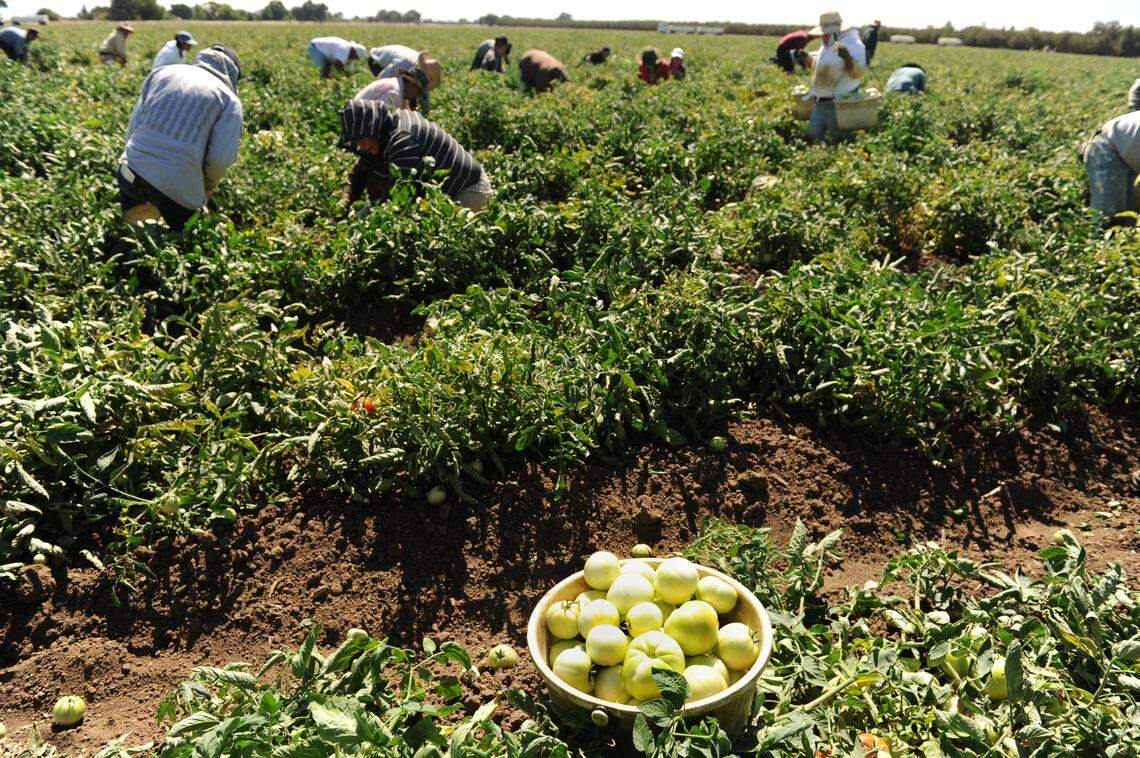
In the landscape of Merced County's agriculture, tomatoes have been a staple for Scoto Brothers Farming. However, recent tariff implementations have led to a noticeable downturn, with the business reporting a 5% drop in revenue as buyers shift their attention to Canadian growers offering lower prices.
The challenges faced by Scoto Brothers are reflective of a broader trend impacting farmers across the Central Valley, following tariff policies introduced by the Trump administration approximately six months ago.
Local growers are experiencing increased expenses for essential supplies such as fertilizer, seeds, and packaging materials. Many have opted to absorb these heightened costs rather than transferring them to customers.
Loren Scoto expressed the frustration farmers feel, stating, “Nowadays, we’re like banging our heads against the wall, like, ‘What do we do to survive around here?’” This sentiment highlights the operational pressures many are currently grappling with.
While the specific experiences can vary among farmers regarding their operations and crops, the overarching theme remains: increased costs are being absorbed by the farmers instead of passed down the supply chain.
According to Breanne Vandenberg, the executive director of the Merced County Farm Bureau, “Farmers are price takers. They’re not price makers, right? So, we can’t pass on any costs regardless of what the issue is.” This underscores the vulnerability of farmers in the face of rising operational costs.
Agriculture plays a crucial role in Merced County's economy, contributing nearly $10 billion and supporting around 39,000 jobs, as reported by the county's Department of Agriculture in 2023.
Owing to the tariffs, Scoto mentioned that fertilizer prices soared dramatically. Estevan Romero from Golden Roots Farms in Madera has also noted the financial strain brought about by tariffs, specifying an increase in the cost of microgreen seeds.
Romero acknowledged the complexities of international supply chains, remarking, “I can imagine that wherever they get their supply, they probably had an impact. So, therefore, it had to be transferred over to the consumer because there was an increase.”
At Fat Cattle farm in Raymond, the effects of tariffs have yielded mixed results. B.J. Fallert noted that while their beef sales may have increased due to a rise in prices of imported competition, the cost of packaging for their tallow products has become a challenge.
Fallert explained, “Because we order our containers off of Amazon, our jars, and our different hardware, tubes and stuff that comes off of Amazon, I’m sure some of it comes out of China. I just discontinued using those that became cost prohibitive and my prices to the consumer are the same.”
Scoto characterized the current agricultural climate as chaotic, largely due to the unpredictability stemming from various federal and state policies. He stated, “I mean, we are surviving here despite all odds. Things are getting more expensive every year, and … our margins are getting razor thin.”