.png)
Surge in U.S. Tariffs Fuels Economic Slowdown and Inflation Risks
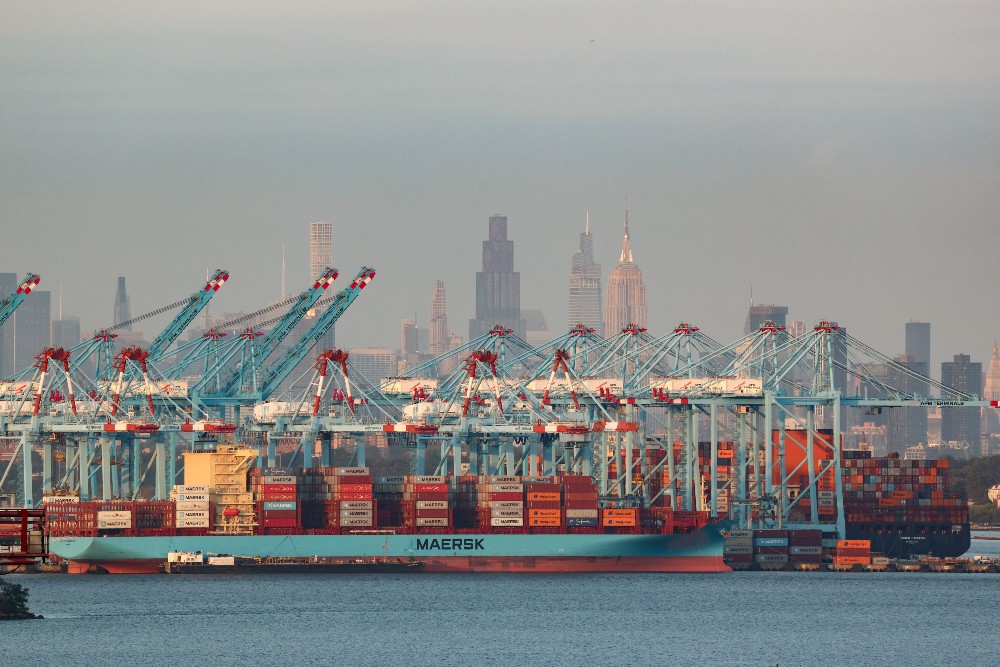
Surge in U.S. Tariffs Contributes to Economic Slowdown
The trade policies implemented by President Donald Trump have resulted in the highest average duty rate for American imports since 1933, reaching approximately 19.5 percent in August. This increase affects over 90 trading partners and could be a contributing factor to a significant slowdown in economic growth both in the United States and around the globe.
According to the Organisation for Economic Cooperation and Development (OECD), international GDP is projected to drop from 3.3 percent last year to 3.2 percent in 2023, with further declines anticipated—2.9 percent by 2026. The economic health of the U.S. appears even more precarious, as GDP growth is expected to decelerate from 2.8 percent in 2024 to 1.8 percent in 2025, and 1.5 percent in 2026.
The substantial duties imposed on imports are significantly impacting the U.S. economy, and the OECD has linked this decline to increased tariff rates and a contraction in net immigration. As the economic landscape shifts, the depreciation of American goods and services contrasts with a more resilient global growth outlook observed in the first half of 2025.
Interestingly, although U.S. growth faces challenges, emerging markets are experiencing some degree of stability. For instance, China's GDP growth is estimated at 4.9 percent for the current year, expected to ease to 4.4 percent in 2026 as the effects of rising tariffs become evident.
OECD analysts noted that “the full effects of tariff increases have yet to be felt,” suggesting that businesses initially bear some of the cost increases. However, these tariffs are now increasingly influencing consumer spending, labor market conditions, and pricing structures. As a result, evidence of an economic slowdown is surfacing, particularly in labor markets where job openings are declining and unemployment rates are increasing in certain regions, including the U.S.
Furthermore, rising prices for essential goods—including food—exemplify the resurgence of inflation, impacting overall consumer costs. According to a recent study from Duke University alongside the Federal Reserve Banks of Richmond and Atlanta, U.S. firms are increasingly concerned about tariffs, with chief financial officers attributing roughly one-third of their price hikes to these trade policy changes. Projections indicate that tariffs may account for about one-quarter of price increases in 2026.
On a global scale, many advanced and emerging economies are showing signs of easing financial conditions, with inflation rates expected to decrease. The OECD forecasts a drop in headline inflation for G20 economies from 3.4 percent in 2025 to 2.9 percent in 2026, while core inflation is predicted to remain steady at 2.6 percent this year, slightly declining to 2.5 percent in 2026.
Nonetheless, the economic outlook carries considerable risks. Analysts warn that further increases in tariff rates, renewed inflationary pressures, or increased fiscal concerns could further diminish economic growth. However, potential relief may come from ongoing challenges to Trump’s tariffs in the Supreme Court and negotiations with various nations. Additionally, advancements in artificial intelligence may provide new avenues for economic growth.
To mitigate the risks of stagnation and rising inflation, the OECD emphasizes the importance of international cooperation in the global trading system. Countries are encouraged to work collaboratively towards more transparent and predictable trade policies that address economic security concerns.