.png)
Supreme Court Weighs Trump's Tariffs: Economic Impact and Legal Questions
- Small Town Truth

- Nov 5, 2025
- 3 min read
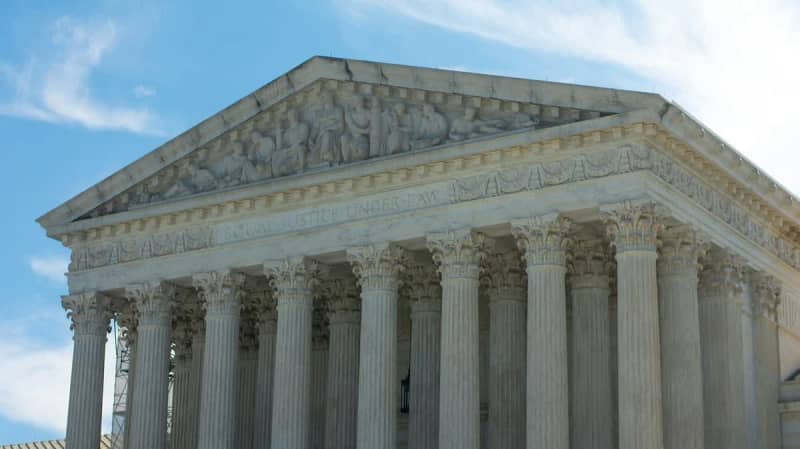
As the U.S. Supreme Court deliberates on the implications of President Donald Trump's global tariffs, the case stands out as one of the most significant economic discussions in recent history, affecting businesses and consumers alike. The justices are scrutinizing whether these tariffs serve a regulatory purpose or if they are primarily designed to generate revenue.
During the hearings, U.S. Solicitor General D. John Sauer defended Trump's tariffs, labeling them as regulatory measures under the International Emergency Economic Powers Act (IEEPA). He claimed that while the tariffs do indeed collect revenue, this was merely incidental to their intended regulatory function. Sauer stated, "These are regulatory tariffs, not revenue raising tariffs," emphasizing that the revenue generation is secondary.
Chief Justice John Roberts cast doubt on the administration's justification for the tariffs, citing concerns that the IEEPA has never been previously utilized for imposing tariffs. He referenced the court's major questions doctrine, highlighting that significant national issues necessitate clear authorization from Congress, noting that the 1977 IEEPA does not explicitly reference tariffs.
Amidst the complex legal discussions, Roberts questioned who is ultimately bearing the costs of these tariffs, to which Sauer acknowledged various parties are involved. While the government asserts that foreign countries are responsible for paying the tariffs, studies indicate that U.S. consumers may also be feeling the financial impact.
Justices from the court's liberal faction, including Sonia Sotomayor, Elena Kagan, and Ketanji Brown Jackson, presented pointed inquiries, questioning the rationale behind not outright banning foreign imports rather than imposing tariffs. They also speculated on the potential implications of declaring other economic actions as emergencies.
Trump's reliance on the twin emergencies of fentanyl trafficking and trade deficits to justify these tariffs has been contentious. His administration argues that the persistent trade deficits that have occurred since 1975 signal a crisis that allows for such emergency powers.
The lawsuit challenging Trump's authority stems from a coalition of states, small businesses, and toymakers, emphasizing that tariff imposition requires Congressional approval and that Trump's actions may exceed his legal authority under the IEEPA. Conversely, Trump's legal team contends that the act provides the president with broad powers to implement emergency measures.
Widespread tariffs were aimed at restructuring global trade to favor American industries, leading to claims that U.S. companies are ultimately responsible for these new taxes. Many of these additional costs have reportedly been passed on to consumers already facing high prices.
In previous communications to the Federal Circuit Court, Sauer and Assistant Attorney General Brett Shumate warned of severe repercussions should the Supreme Court revoke Trump's tariff authority, arguing that doing so could harm national security and the economy significantly.
Despite ongoing legal challenges, tariffs have emerged as a significant revenue source, with U.S. Customs and Border Protection reporting nearly $90 billion collected so far this year. Trump's administration has suggested these funds could be allocated to alleviate the income tax burden for families and address the federal debt, which has surpassed $38 trillion.
An estimation from the Congressional Budget Office indicated that tariffs could yield up to $4 trillion over the next decade; however, they caution that these tariffs will inherently raise consumer prices and diminish families' purchasing power.
A tariff is defined as a tax imposed on imported goods, which the importing entity must pay. This cost can either be absorbed by the importer or transferred to consumers through elevated prices.
