.png)
Supreme Court Debates Presidential Tariff Authority and Linguistic Nuance
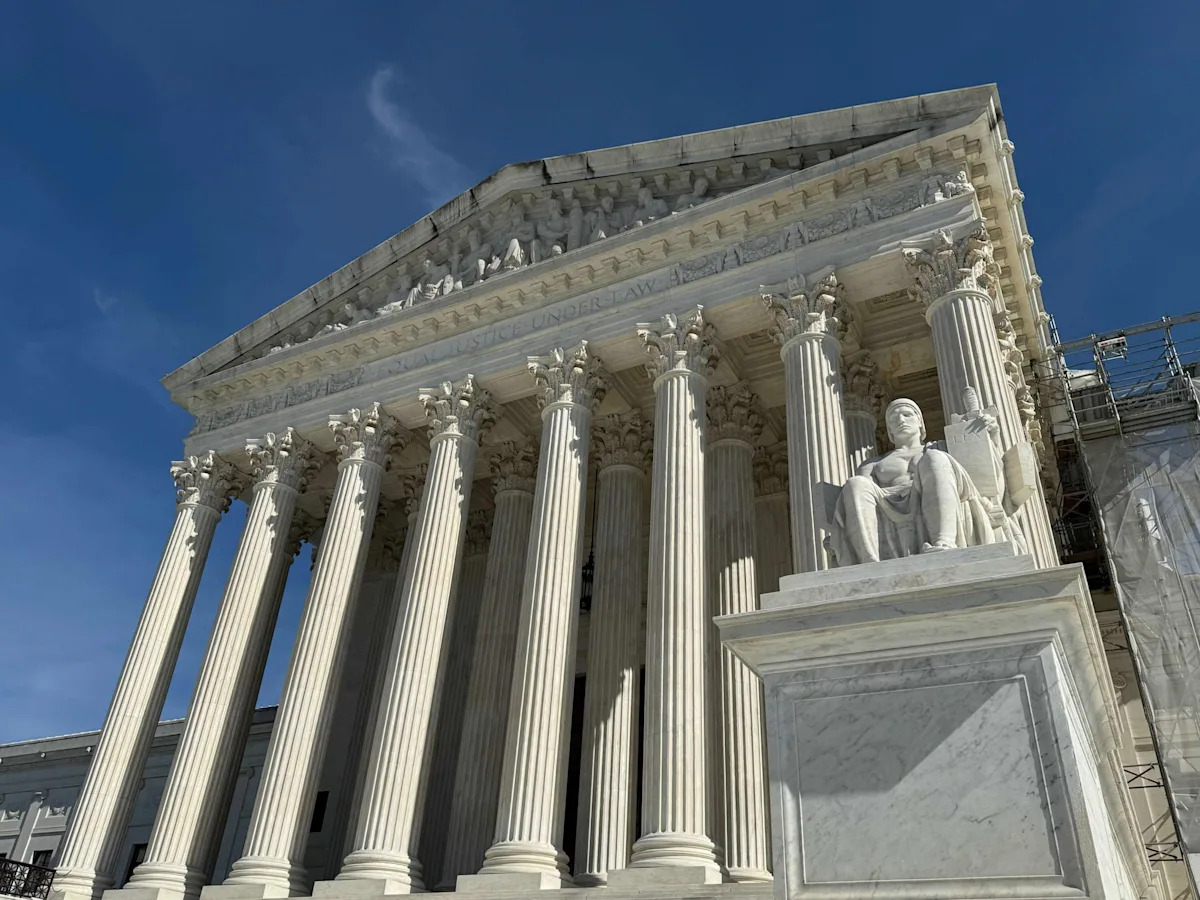
A recent Supreme Court hearing unveiled a complex debate surrounding presidential authority regarding tariffs, highlighting the prominence of linguistic interpretation in legal evaluations. While many anticipated a vigorous discussion on the extension of executive power, the court's arguments gravitated more towards a meticulous examination of specific language used in relevant statutes.
Focus on Language: The Role of 'Regulate'
During the Supreme Court arguments, the term "regulate" took center stage, garnering significant attention from justices who invoked the word 155 times. The case at hand concerns the International Emergency Economic Powers Act (IEEPA), which grants the president powers described through a series of verbs, including "regulate" in the context of "importation." Notably, the inquiry didn't heavily rely on the major questions doctrine, which posits that significant delegations of power by Congress to the executive should be accompanied by clear legislative language.
Verbal Analysis as a Judicial Approach
The justices’ reliance on specific legal maxims was evident. Latin phrases such as noscitur a sociis, which interprets ambiguous terms in relation to other associated words, and ejusdem generis, suggesting that catch-all phrases refer to items of a similar nature, framed much of the discussion. The central question posited was whether "regulating importation" could extend to the imposition of tariffs, a form of taxation.
Context of Authority Under IEEPA
IEEPA provides the president the ability to "investigate, block … regulate, direct and compel, nullify, void, prevent or prohibit, any … importation." Throughout the argument, justices emphasized a holistic reading of this list of verbs, leaning on the principle of noscitur a sociis. They noted how the other verbs in the statute do not suggest tax-related powers, thereby challenging the justification for interpreting "regulate" as including tariffs.
Perspectives and Tensions
The solicitor general attempted to steer the court away from stringent textual interpretations, arguing for a broader reading of executive powers under IEEPA. Ironically, the push for a less textual approach stands in contrast to the current court's trend towards textualism, heavily influenced by the president's judicial appointments.
Presumptions in Legal Reasoning
In discussions, justices invoked a presumption that Congress maintains consistency throughout U.S. law, questioning why "regulate" in the context of IEEPA should include the authority to levy tariffs when specific terminology is typically used for such powers in other statutes.
Debates on Legislative Intent
Justice Ketanji Brown Jackson presented a contrasting view, advocating for an understanding of the statute that incorporates Congressional intent. This perspective pushes back against the textualist methodology, suggesting that legislative history should inform interpretations of the law.
Major Questions Doctrine on the Sidelines
Interestingly, debates over whether the major questions doctrine applies did not take front stage, even as discussions frequently brushed against this threshold. This marks a shift compared to some prior cases where ambiguity was a prerequisite for invoking such doctrine.
Implications for Presidential Power
As the court considers this case, the major questions doctrine might not play a pivotal role but could serve as supplementary support for the court's eventual interpretation of the statute. The trend suggests the justices prefer a straightforward path of examining statutory language over the complexities of broad constitutional questions regarding presidential powers.
For ongoing updates on this case and further Supreme Court analysis, visit SCOTUSblog.