.png)
Navigating Tariff Tsunami: Businesses Adapt to Evolving Trade Policies
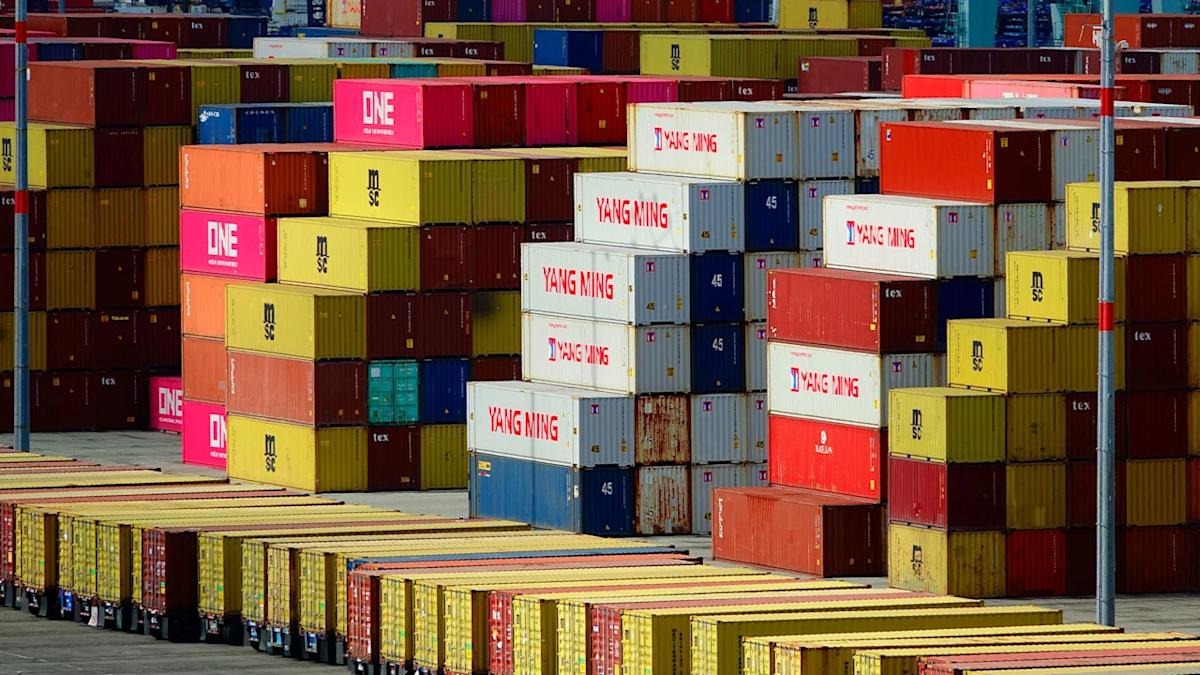
As international trade policies evolve, businesses are confronted with significant challenges stemming from tariffs, which have been described as a “tariff tsunami.” These tariffs, instituted during President Trump's administration, are creating a ripple effect in global supply chains, leading companies to navigate a complex economic landscape, as reported by Forbes.
In light of these tariff increases, many retailers and manufacturers are reevaluating their supply chain strategies. They are seeking innovative solutions to deliver products efficiently while minimizing additional costs and delays. These efforts are summarized under the emerging strategy known as “tariff hacking,” a concept highlighted in a recent analysis from industry experts.
To mitigate the financial burden of tariffs, companies are increasingly adopting a business-to-business-to-consumer (B2B2C) approach. This method involves employing intermediaries, or middleman companies, which operate as a merchant of record for direct-to-consumer sales on corporate websites. These intermediaries purchase products on behalf of retailers, pay tariffs on the wholesale price, and subsequently ship items to consumers within the U.S., as detailed by CNBC.
James Mohs, an associate professor of accounting, finance, and taxation at the University of New Haven, explained the long-standing nature of such strategies: “This not new. It’s been going on forever. Simple example: Let’s say you are a Chinese company and you have a 50% tariff coming into the U.S. and you have a subsidiary in Vietnam that has a 10% tariff. You ship it to them, and they ship it to the U.S. with a 10% tariff, and they save 40%. If you can reduce your tariff from 50% to 10%, it keeps the price of the goods relatively lower.”
Despite the potential benefits, experts caution that “tariff hacking” may serve only as a temporary solution, with uncertain long-term viability. Mohs remarked, “Right now, it’s a short-term solution. Hard to say if it’s a long-term solution because this tariff war is in such a state of flux right now. . . . [It’s unclear] whether the U.S. government will set the tariff based on the original country of origin or [continue] to allow the subsidiary to act as an intermediary.”
This post originally appeared at fastcompany.com
Subscribe to get the Fast Company newsletter: http://fastcompany.com/newsletters