.png)
Inflation Just Hit 3.8%. The Iran War Is the Engine.
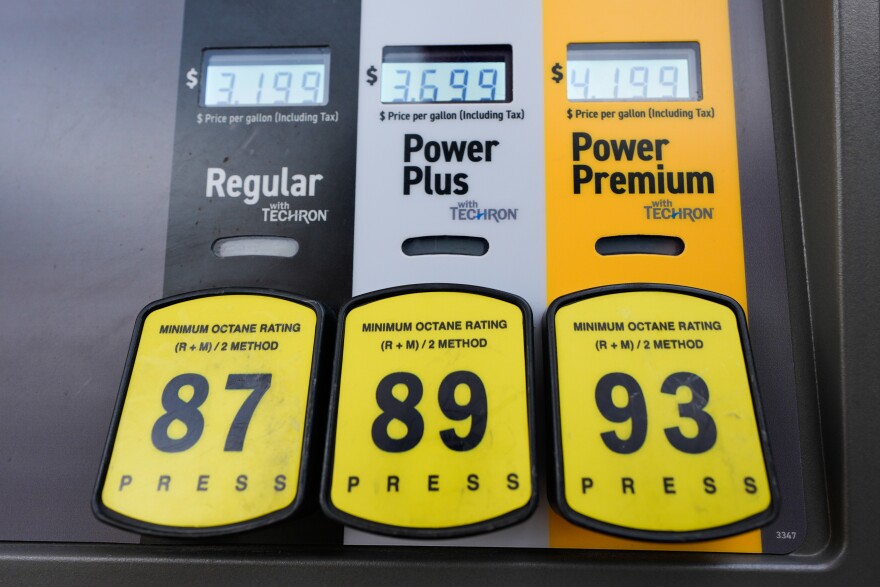
Americans got the bill this week. The Labor Department reported on Tuesday that consumer prices rose 3.8 percent over the past year through April, the biggest annual jump since 2023, with energy alone accounting for more than 40 percent of the monthly increase. That energy line is shorthand for one thing: the war in Iran.
The pump tells the story plainest. Regular gasoline ran around $2.98 a gallon the week before U.S. and Israeli airstrikes hit Iran in late February. By May 11 the national average had climbed to $4.52 — a more than 50 percent rise in roughly ten weeks. Brent crude, the global benchmark, sits near $104 a barrel, up 44 percent since before the war. The Strait of Hormuz, the chokepoint through which a fifth of the world's seaborne oil normally flows, has been effectively closed since March 4.
That diesel doesn't stay at the pump. It moves through every truck, tractor, and refrigerated trailer that carries food to a grocery store, and through the fertilizer plants that depend on natural gas. April's report shows grocery prices rose 0.5 percent, dining out gained 0.7 percent, and shelter costs picked up to 0.6 percent. Airfares climbed 2.8 percent. Each of those line items shares a common upstream input: fuel.
Economists are blunt about where it leads. Mark Zandi, chief economist at Moody's Analytics, told CBS News last month: "I think the damage has already been done, in part because there's no going back on oil prices, at least not any time in the near future." Zandi's projection puts headline inflation on a path toward 4 percent by year-end. The Federal Reserve Bank of Dallas has modeled the scenarios in more detail: if Hormuz reopens within a quarter, headline inflation rises about 0.6 percentage points and core inflation 0.2. If the closure stretches three quarters, headline inflation could climb 1.8 percentage points and core 0.4 — and the country would be looking at the worst price environment in more than three years.
None of this is the only thing pushing prices up. Tariffs from earlier in the year are still working their way through supply chains, with most of the pass-through expected to land in the first half of 2026. A historic drought across about 61 percent of the continental United States is squeezing farmers at the same time their fertilizer and diesel costs climb. Shelter, the largest single component of the CPI, continues to run hot for reasons unrelated to the Persian Gulf. Inflation always has more than one author.
But the April print made the relative weight clear. Energy supplied more than 40 percent of the all-items monthly rise. Tariffs, drought, and shelter are real, but they are slow burns. The war is the acute shock — and it is the one Washington has the most direct ability to end.
President Trump rejected Iran's latest counterproposal on Sunday, and traders moved within hours to bid gasoline futures higher; some forecasters now expect the national average to break $5 a gallon before relief arrives. For a working family in a small town, that is not an abstraction. It shows up in the truck on Monday, the freezer aisle on Thursday, and the kitchen-table math at the end of the month.
The April inflation number is one snapshot. The May print, due in June, will capture more of this week's escalation. Until the shooting stops and the Strait reopens, the country should expect the receipts to keep climbing.