.png)
Impact of Tariffs on California Farmers: Challenges and Uncertainties
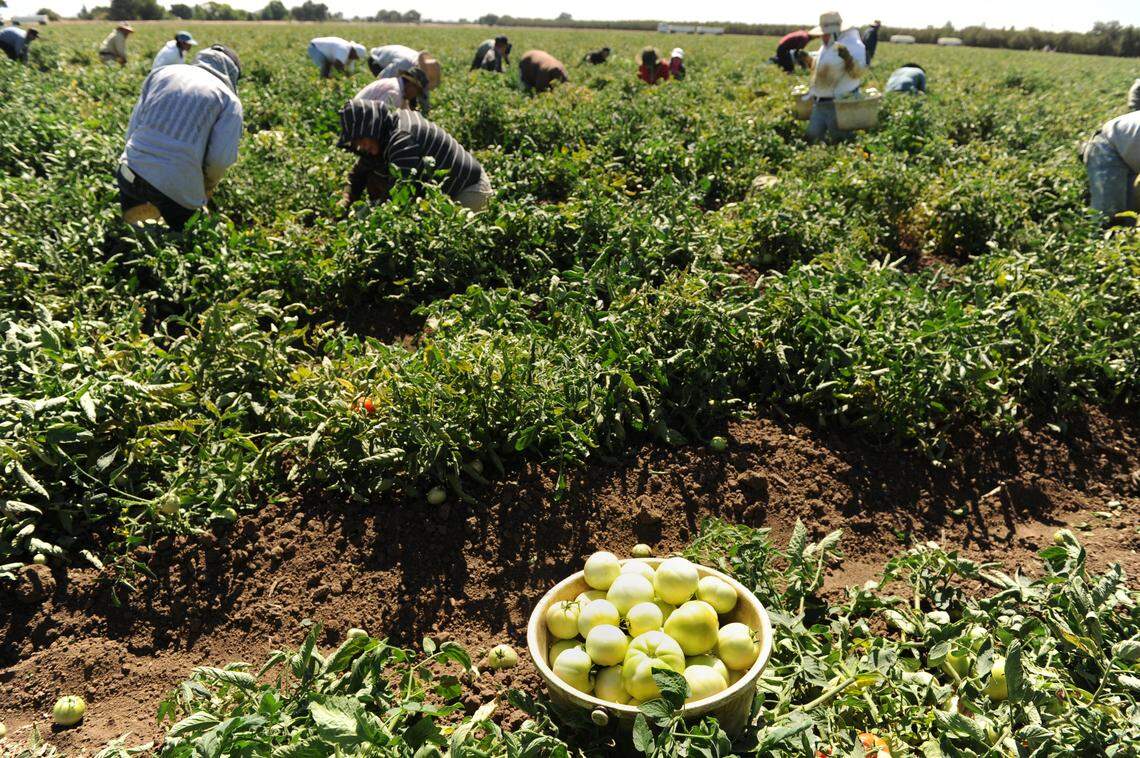
Tomatoes play a crucial role in the operations of Scoto Brothers Farming based in Merced, California. However, after the introduction of tariffs on tomatoes just a few months ago, business has seen a decline of about 5%. This downturn is attributed to buyers shifting their purchases to Canadian growers who can offer more competitive pricing.
The impact of these tariffs is not limited to Scoto Brothers. Many farmers across the Central Valley are grappling with rising costs associated with key agricultural inputs such as fertilizer, seeds, and packaging materials—expenses that they are choosing to absorb rather than pass on to shoppers.
Loren Scoto expressed his frustration, stating, “Nowadays, we’re like banging our heads against the wall, like, ‘What do we do to survive around here?’” This sentiment reflects a widespread concern among farmers regarding operational viability in the current economic climate.
While the challenges faced by farmers may vary by the type of operation and crops grown, the overarching trend is one of increased costs that are collectively borne by the producers. Breanne Vandenberg, the executive director of the Merced County Farm Bureau, elaborated on the predicament by noting, “Farmers are price takers. They’re not price makers, right? So, we can’t pass on any costs regardless of what the issue is.”
Agriculture is a vital contributor to the economy in Merced County, with the agricultural sector generating nearly $10 billion and providing almost 39,000 jobs as estimated by the county's Department of Agriculture in 2023.
Scoto reported that earlier tariff cycles caused a dramatic increase in the cost of fertilizer. Estevan Romero from Golden Roots Farms in Madera noted similar trends affecting the prices of microgreen seeds, emphasizing that international supply chains are likely impacted, driving costs up.
The effects of tariffs produce mixed outcomes for businesses like Fat Cattle farm in Raymond. B.J. Fallert indicated that while beef sales may benefit from the higher prices of imported competitors, the costs for packaging materials have surged, leading to adjustments in sourcing. “Because we order our containers off of Amazon, I’m sure some of it comes out of China,” she pointed out. “I just discontinued using those that became cost prohibitive, and my prices to the consumer are the same.”
Scoto also characterized the current market environment as chaotic, attributing this disorder to the uncertainty generated by recent federal and state policy changes. “I mean, we are surviving here despite all odds,” he said. “Things are getting more expensive every year, and … our margins are getting razor thin.”