.png)
Colorado's Economy Faces Turmoil Amid Tariff Increases and Job Losses
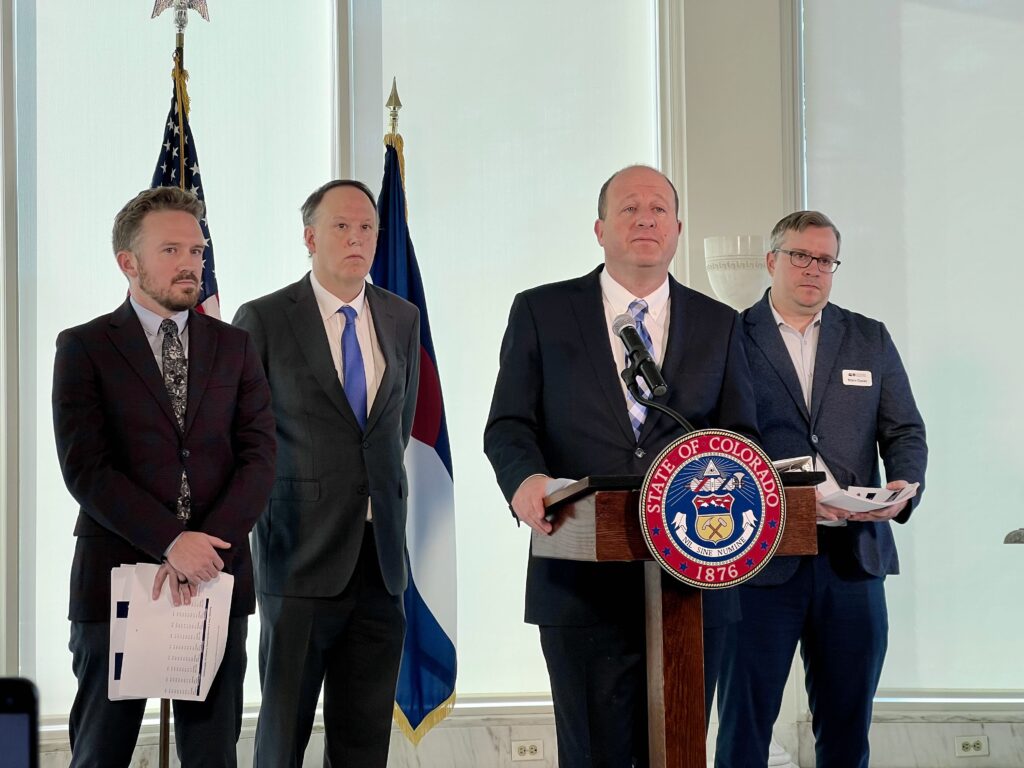
The economic landscape in Colorado is facing significant changes due to newly imposed federal tariffs, and recent analysis sheds light on the extent of these impacts. Governor Jared Polis unveiled a report on September 4, 2025, detailing how the effective tariff rate in the state has dramatically surged, now reaching levels seven times higher than in the previous year.
The report, produced at the request of Polis through an executive order in July, emphasizes that Colorado’s effective tariff rate escalated from an estimated 3% last year to a staggering 21%. This surge is largely attributed to a series of tariffs implemented by the Trump administration, which include a baseline tariff of 10% on all imports that began in April, alongside specific rates of up to 50% on goods from various countries.
During a press conference following the report's release, Polis remarked, “One thing that’s clear is that everyone loses in a trade war. It’s a race to the bottom.” This perspective underscores a growing concern among state leaders about the fallout from ongoing international trade disputes.
The tariffs, which primarily affect imports from Canada, Mexico, and China—accounting for around half of Colorado’s imports—impose significant costs on businesses. Jeff Kraft, deputy director of the Colorado Office of Economic Development and International Trade, highlighted the dilemma businesses face: “When businesses face high tariffs and the associated uncertainty and confusion, they have difficult choices... Companies are forced to either pass costs onto consumers, which raises prices and can reduce revenue and obviously hurts the consumer, or they have to shift funds to cover the cost of the tariffs internally.”
The analysis forecasts that industries such as agriculture, energy, construction, and aerospace could experience the most severe repercussions. Notably, beef exports have plummeted by nearly $40 million in the first half of this year alone, potentially resulting in the loss of 265 jobs and an $80 million downturn in economic output in Colorado.
Additionally, Colorado’s aerospace sector could face significant challenges due to tariffs on materials—approximately 73% of the materials needed for this industry are sourced from Switzerland. Projections include a potential reduction in demand for aerospace products, which might lead to the loss of approximately 195 jobs and a GDP reduction of $61.6 million.
The construction industry is also at risk, with the report suggesting that tariffs on imported construction materials could inflate housing costs by 4% to 6%. “There’s no doubt that any costs associated with tariffs are directly incorporated into construction costs and into housing costs,” Polis noted, emphasizing the detrimental impact on housing affordability as the state attempts to lower construction expenses.
The report also suggests that state revenues could take a hit, with estimates indicating a possible loss of $240 million in general fund revenue for the current fiscal year, escalating to $450 million in the next fiscal year if tariff rates persist.
Amid these challenges, the Colorado Legislature has recently completed a special session aimed at raising revenue to mitigate the adverse effects stemming from federal spending and tax adjustments. Colorado notably joined a coalition of states that challenged the Trump administration's tariff actions, asserting that many were unlawfully imposed under emergency powers.
In light of the current situation, Polis has called upon Congress to take decisive action. He stated, “We really hope that Congress shows a spine and pushes back against costly increases through tariffs...” He stressed that Congress has the ability to limit presidential powers regarding tariff imposition, which he believes is necessary to foster a more stable economic environment for the state.