.png)
America Struck Iran Without Warning Anyone — Then Trump Made a Pearl Harbor Joke to Japan's Prime Minister
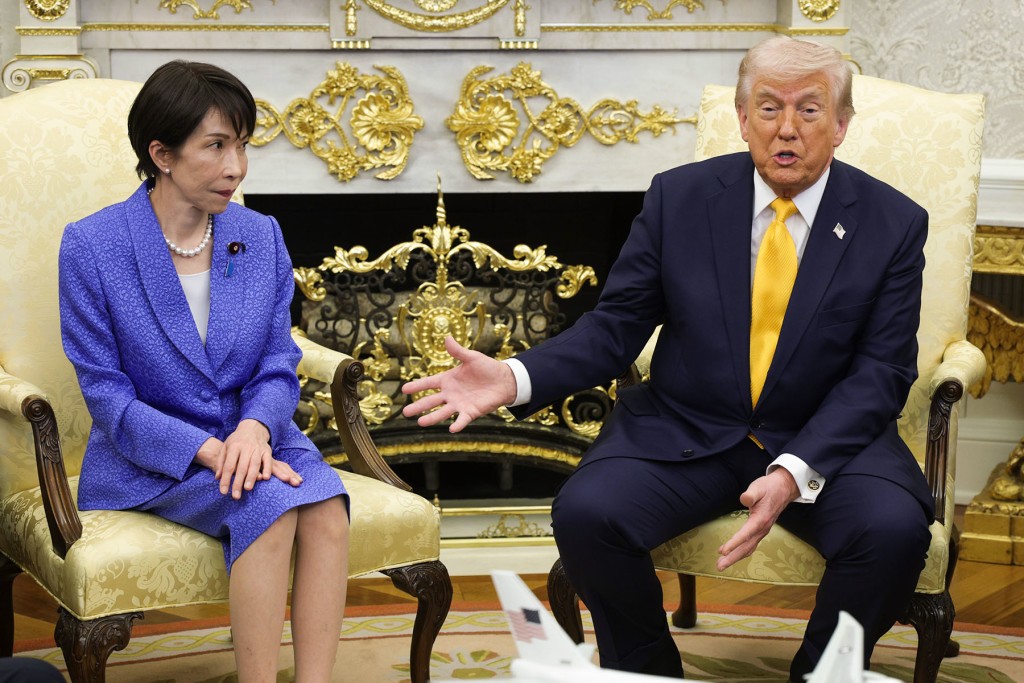
There's a new front in America's foreign policy — and most Americans found out about it the same way our closest allies did: after the bombs had already fallen.
On February 28, the United States launched one of its largest unilateral military operations in decades, striking targets inside Iran without giving advance notice to allied governments in Europe or Asia. The scale alone is staggering: Pentagon officials confirmed the U.S. has hit 7,000 targets inside Iran and sunk or damaged 120 ships belonging to the Iranian navy. Now, in the days following those opening strikes, President Donald Trump is explaining his reasoning — and the explanation is raising eyebrows around the world.
When reporters pressed Trump on why allies were kept in the dark, the President was direct: he wanted the element of surprise, and he didn't want anyone tipping off Tehran before the operation began.
"One thing you don't want to signal too much, you know, when you go in," Trump said. "We went in very hard."
Trump maintained that the secrecy paid off — that U.S. forces struck "much more" than anticipated in the first 48 hours specifically because Iran had no warning. "If I go and tell everybody about it, there's no longer a surprise," he said.
That logic may make military sense on its face. But the way Trump chose to illustrate it has stirred its own separate controversy — one centered not on Iran, but on Japan.
An Unexpected Comparison
Trump made these remarks during a press availability in the Oval Office alongside Japanese Prime Minister Sanae Takaichi, who had traveled to Washington to reaffirm the U.S.-Japan alliance — one of America's most important partnerships in the Pacific region.
In explaining why no allies were warned ahead of time, Trump turned to history — specifically, to December 7, 1941. "We didn't tell anyone about it because we wanted a surprise," Trump said. "Who knows better about surprise than Japan?" He then looked directly at the Prime Minister: "Why didn't you tell me about Pearl Harbor?"
The room laughed. Takaichi did not. By multiple accounts, her eyes widened, her smile faded, and she physically pulled back as the reference landed.
The attack on Pearl Harbor killed more than 2,400 Americans and pulled the United States into World War II. President Franklin D. Roosevelt famously called it "a date which will live in infamy" in his address to Congress the following day, requesting a formal declaration of war.
For most Americans — and certainly for most Japanese — Pearl Harbor is not a punchline. It is a defining wound in the history between two countries that have spent the eight decades since working to become close allies. Invoking it casually, in that setting, with the Japanese Prime Minister sitting inches away, was a moment that many diplomatic observers found difficult to categorize as anything other than a miscalculation.
What This Moment Reveals
Takaichi's visit was meant to be a show of strength between partners. Japan is a cornerstone of U.S. strategy in the Pacific, particularly as tensions with China remain a constant undercurrent in the region. The last thing a meeting like this was supposed to produce was an awkward exchange that dominates the news cycle.
But the Pearl Harbor moment did more than create an uncomfortable photo op. It put a spotlight on a broader question that everyday Americans — the ones footing the bill for military operations, the ones with family members in the armed services, the ones watching gas prices and grocery costs tick upward — have every right to ask: Are our government's foreign policy decisions being made with care, strategy, and respect for the relationships that keep this country safe?
Large-scale military operations don't happen in a vacuum. They carry economic consequences — from energy market volatility to the cost of sustaining prolonged military engagement abroad. They also carry diplomatic ones. Allies who feel sidelined don't simply forget. The willingness of partners to share intelligence, coordinate on sanctions, or stand shoulder-to-shoulder in a future crisis can hinge on exactly the kind of trust that gets strained when major military action is launched without so much as a phone call.
The lawmakers and foreign policy observers already raising questions about the decision to exclude allies from advance notice aren't doing so out of partisanship alone. They're asking what it costs — in relationships, in credibility, and eventually in dollars — when America acts alone and explains itself with a Pearl Harbor joke.